Who Pays for the Cornbread? The Real Ledger Behind a School Bus at the Museum Door
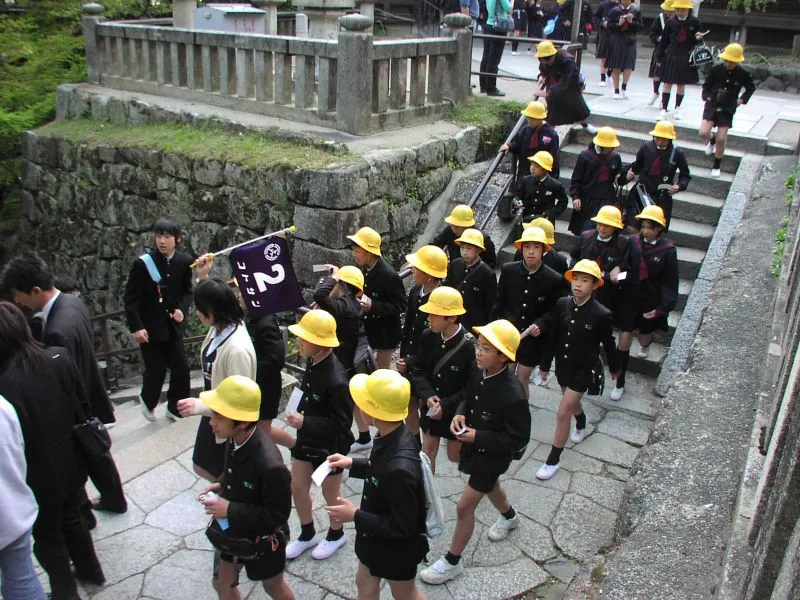
Photo: Sébastien Bertrand from Paris, France, CC BY 2.0, via Wikimedia Commons
The Bus Arrives at 9:40, and the Money Left Weeks Ago
From the parking lot, a field trip looks effortless. The yellow bus groans up the drive, the doors fold open, and a river of backpacks pours onto the gravel. What the students cannot see — and what most parents and school boards rarely discuss — is the small mountain of labor and expense already sunk into the ninety minutes they are about to spend on the Hill.
Consider a single visit: forty-six fifth graders, two teachers, five chaperones. Before anyone boards the bus, a volunteer grant writer has spent an estimated twelve hours drafting and revising an application to a state humanities council. A retired schoolteacher turned docent has rehearsed a station rotation she will perform four times that day. Someone has purchased 6 dozen cornbread muffins at their own expense, because the living-history demonstration does not work without something warm in the hands.
Itemizing the Invisible
Run the numbers on a typical mid-size heritage site hosting a school group, and the costs cluster into four buckets.
Materials and consumables. Candle wax for dipping demonstrations, quill pens, photocopies of period maps, flour and cornmeal for the hearth. It sounds trivial until you multiply it by thirty school days a season. At many small sites, this line item runs $8 to $15 per student — costs that admission fees of $3 or $4 per child cannot cover.
Staff time. A site director who spends two hours coordinating schedules with a school district is not writing grants, cataloging artifacts, or repairing a leaky roof during those two hours. At small museums, staff and volunteer hours consumed by education programs routinely exceed the hours visitors actually experience.
Transportation, the great divide. Ironically, the museum often absorbs none of the bus cost — but bus cost is the single biggest reason schools cancel. When district field-trip budgets are cut, the first casualty is not admission fees but the $350 charter. Some heritage sites have responded by quietly building transportation stipends into their grant requests, an admission that heritage education lives or dies on diesel fuel.
The docent economy. Most small sites run on retired teachers, local historians, and grandparents who show up because they believe the work matters. Valued at even modest hourly rates, volunteer labor at a rural heritage site can represent tens of thousands of dollars annually. It is the least visible subsidy in American education.
Can Heritage Tourism Survive on a Shoestring?
The honest answer: it survives, but not comfortably, and not by accident. Sites that endure share a pattern. They diversify funding early — grants, memberships, a modest gift shop, county tourism dollars — rather than betting everything on gate receipts. They treat school programs not as a cost center but as a mission anchor, because a child who dips a candle at age ten becomes the member, donor, or board member of thirty years hence.
There is also an uncomfortable truth worth stating plainly: when public school budgets shrink, the burden does not disappear. It transfers — to volunteers with fixed incomes, to grant writers working for free, to docents buying cornmeal out of pocket. That is generosity, but it is also fragility. A heritage site's education program is only as durable as the least sustainable subsidy holding it up.
Who Steps Up When the Budget Is Cut
The encouraging news is that the shoestring has company. State humanities councils, county hotel-motel tax boards, local rotary clubs, and regional utility foundations all fund heritage education, often with modest grants of $2,000 to $10,000 that transform a program's reach. Parents' organizations increasingly fund buses directly. And heritage sites themselves are getting savvier — bundling school visits with public programming, recruiting docents through community colleges, and documenting volunteer hours to demonstrate matching value on every grant application.
The next time a bus pulls up to a small museum on a Tuesday morning, remember that you are watching the visible tip of an invisible ledger — one written in grant applications, muffin tins, and the stubborn conviction that history is worth handing to the next generation in person.