The Whistle That Never Dies: Railroad Ghost Stories and the Folklore of the Hill
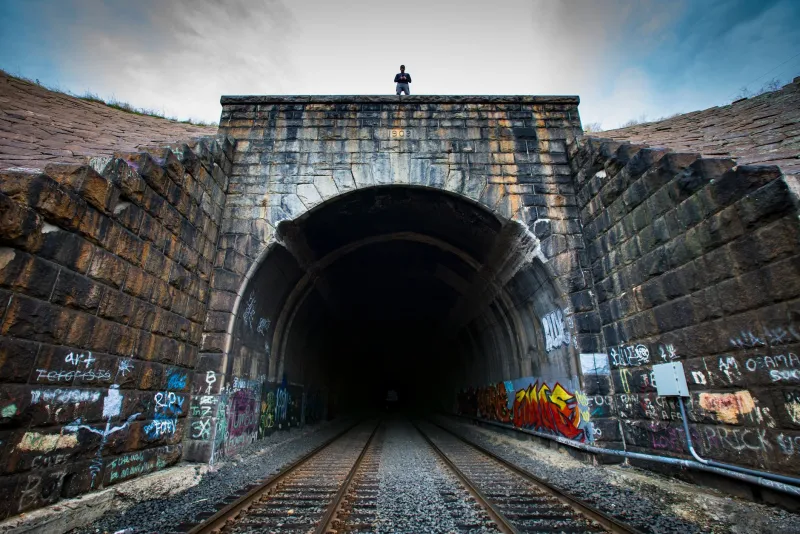
Every railroad town in America seems to have its ghost. In the hamlets of Georgia, the Carolinas, and the Ohio Valley, the dead rarely rest quietly — they flag down trains, wave lanterns from abandoned platforms, or announce their presence with a whistle that no living engineer ever blew. Tunnel Hill is no exception. What sets this place apart is how faithfully its legends have been preserved, studied, and — perhaps most importantly — connected to documented history.
When the Railroad Arrived, So Did the Stories
The Western & Atlantic Railroad bored its tunnel through the ridge here in the late 1840s, an engineering feat that turned a quiet stretch of northwest Georgia into a permanent fixture on the map. Railroading was dangerous, exacting work. Brakemen fell between cars, laborers died in blasting accidents, and soldiers from both armies passed through — and sometimes perished — during the Civil War years that followed.
From these real tragedies grew a rich body of oral tradition. Local accounts speak of a phantom locomotive said to roar through the pass on foggy nights, of lantern lights moving along the old grade where no one walks, and of a mournful whistle heard by residents long after the last scheduled train had passed. Folklorists would recognize the pattern immediately: these are variations on what scholars call the "ghost train" motif, a legend type found across the American landscape from the tunnels of Pennsylvania to the prairie lines of Kansas.
Why Train Legends Took Root in American Culture
The railroad changed how Americans experienced time, distance, and death. A collision or a boiler explosion could claim a dozen lives in an instant, far from home, with news traveling by the same iron rails that caused the disaster. It is little wonder that the train became a vessel for grief and memory in folk culture.
Consider how deeply this lore runs through the American songbook. Ballads of wrecked engines and doomed brakemen — the tradition that gave us songs like "The Wreck of the Old 97" — turned real disasters into cautionary verse passed down through generations. The Wabash Cannonball, Casey Jones, and the midnight special all carry echoes of the same impulse: to give the railroad a soul, and sometimes a ghost.
Tunnel Hill's own legends fit squarely within this national tradition, but they carry local fingerprints — the specific geography of the pass, the wartime history of the tunnel, and the families who lived along the tracks and heard the night trains for a century.
Separating the Legend from the Record
At the Heritage Center, we take a two-track approach to folklore: honor the story, then examine the record. Many of the tales told on the Hill can be traced to verifiable events — wartime skirmishes at the tunnel, documented rail accidents on the W&A line, and the deaths of railroad workers whose graves still stand in nearby cemeteries. Others resist documentation entirely, existing only in the memories of families who have told them for generations.
Both kinds of stories matter. The ones we can verify connect visitors to concrete history. The ones we cannot reveal something equally valuable: what a community feared, mourned, and remembered.
A Folklore Trail for the Curious Visitor
For those who wish to experience these stories where they were born, we suggest an informal walking route through the village:
-
The Tunnel itself — Begin at the 1850 tunnel, the geographic heart of nearly every local legend. Its dark bore and echoing acoustics explain, perhaps, why so many stories involve sounds rather than sights.
-
The old rail line and depot area — Walk the grade where the phantom trains are said to run. Interpretive signage connects the folklore to the documented operations of the Western & Atlantic.
-
Clisby Austin House — This antebellum home, which served as a headquarters during the war, anchors several of the area's older ghost accounts and offers a window into the civilian experience of the railroad era.
-
The village streets at dusk — Longtime residents will tell you the whistle is best heard on foggy autumn evenings. We make no guarantees — but we will note that generations of listeners have insisted otherwise.
Keeping the Stories Alive
Folklore survives only when someone bothers to tell it. Through guided tours, oral history recordings, and community storytelling events, the Heritage Center works to ensure that Tunnel Hill's legends are passed on with both their mystery and their context intact. A ghost story, after all, is a kind of historical document — one written not in ink, but in memory.
So the next time you stand near the tunnel as evening settles over the ridge, listen closely. Whether the whistle you hear is wind, memory, or something harder to name, it carries the voices of everyone who ever lived and worked on this hill. Our job — and our privilege — is to make sure those voices keep sounding.


