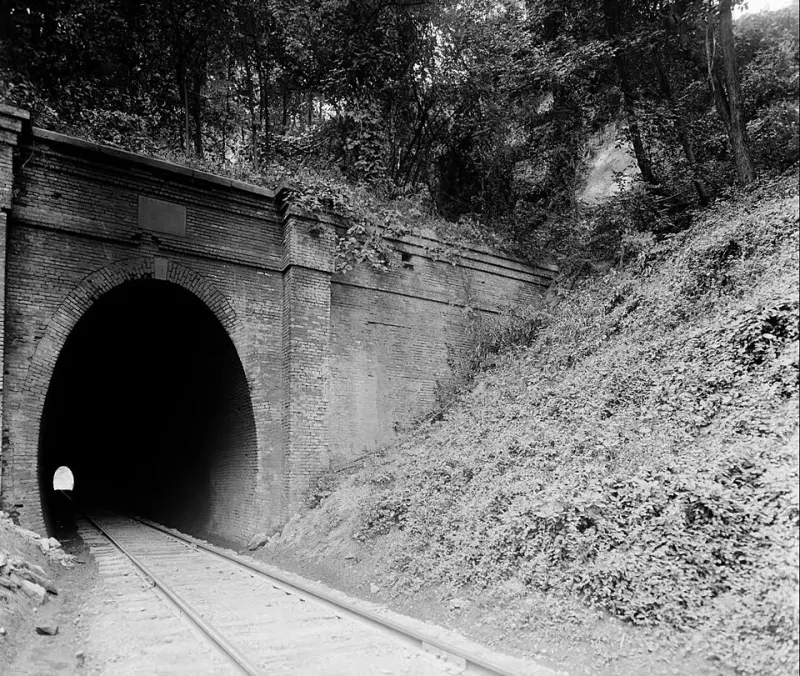
Ripples from the Hill: How Tunnel Hill's Preservation Model Is Igniting Grassroots History Movements Across America

Photo by Photo by goodrich kingrey on Unsplash on Unsplash
There is a particular kind of confidence that comes from witnessing something done well. For dozens of community leaders, local historians, and heritage volunteers scattered across the American heartland and beyond, a visit to Tunnel Hill Heritage Center — or even a careful study of its publicly documented methods — provided exactly that kind of confidence. It told them, in no uncertain terms, that the history of their own towns was not too modest, too fragmentary, or too obscure to be worth preserving.
The phenomenon has come to be described informally among preservation professionals as the "Tunnel Hill Effect" — a measurable ripple of inspired action that has spread outward from a single site in northwestern Georgia into communities as far-reaching as rural Ohio, the Mississippi Delta, and the high plains of Kansas.
A Blueprint Drawn from Necessity
Tunnel Hill's approach to heritage conservation was never designed to be exported. It emerged from the specific pressures and possibilities of a community determined to honor the layered history of a site that encompassed Civil War engagement, 19th-century engineering achievement, immigrant labor, and the contested geography of freedom. The Heritage Center's staff developed interpretive frameworks, community engagement strategies, and archival methodologies that were, above all, practical — built to work with limited budgets, volunteer networks, and collections that arrived in shoeboxes as often as in proper archival containers.
Yet it was precisely this practicality that made the model so transferable. When heritage professionals from other communities toured the center or attended regional preservation conferences where Tunnel Hill's staff presented their work, they did not encounter an approach that required institutional resources beyond their reach. They encountered a philosophy: that rigorous historical honesty, genuine community involvement, and a commitment to telling the full story — including the uncomfortable parts — could transform even a modest site into a destination of genuine educational and cultural significance.
From the Hill to the Holler: Stories of Inspired Action
In eastern Tennessee, the director of a small county historical society describes the moment she understood what was possible. "We had artifacts. We had buildings. We had oral histories that no one had ever recorded," she explained during a recent regional preservation symposium. "What we lacked was the belief that any of it mattered to anyone outside our county. Tunnel Hill showed us that local specificity is not a limitation — it is the entire point."
Her society has since launched a structured oral history program, digitized more than four thousand photographs, and opened a renovated 1890s depot as a public interpretive space. Attendance in the first year exceeded projections by nearly forty percent.
A similar story unfolded in a small river town in southern Illinois, where a group of volunteers had spent years accumulating materials related to the town's role as a 19th-century river trading hub. The group's founder credits a field trip to Tunnel Hill Heritage Center — organized through a state humanities council grant — as the turning point. "We came back understanding that interpretation is a craft," he said. "You don't just display objects. You build a narrative that connects those objects to the lives of real people, and you make sure those people include everyone who was actually there — not just the ones who ended up in the history books."
The Illinois group has since incorporated as a nonprofit, secured its first major grant from a state preservation fund, and partnered with a local school district to develop a curriculum unit tied to its collections.
The Architecture of Influence
What accounts for the particular reach of Tunnel Hill's influence? Preservation scholars who have studied the phenomenon point to several intersecting factors.
First, the Heritage Center has been unusually generous in sharing its internal processes. Staff members have participated in workshops, contributed to professional publications, and made their interpretive planning documents available to peer institutions. This transparency has allowed other organizations to learn not just from Tunnel Hill's outcomes but from its decision-making — including the missteps and revisions that shaped its current approach.
Second, the center's emphasis on inclusive historical narration — its sustained effort to recover and foreground the stories of enslaved workers, immigrant laborers, and women whose contributions were long overlooked — resonated deeply with communities that had their own populations of historically marginalized residents whose stories had never been told. The message that rigorous, inclusive history attracts broader audiences and deeper community investment proved compelling to organizations that had previously assumed such an approach would be controversial.
Third, and perhaps most significantly, Tunnel Hill's visible success as a heritage destination demonstrated that investment in local history yields tangible returns. Communities that had struggled to make the economic case for preservation found in Tunnel Hill a persuasive example of heritage tourism done right — a site that draws visitors, generates local economic activity, and builds genuine civic pride without sacrificing scholarly integrity.
Sustaining the Movement
The grassroots energy that Tunnel Hill has helped to catalyze is not without its challenges. Many of the organizations it has inspired operate on shoestring budgets, depend heavily on volunteer labor, and face the perennial preservation threats of deteriorating structures, aging collections, and community indifference. The path from inspiration to sustainable institution is long and rarely linear.
Staff at the Heritage Center are candid about this reality. Preservation is not a single act of rescue but an ongoing commitment that must be renewed by each generation. The organizations that have drawn on Tunnel Hill's example are at various stages of that journey — some well-established and growing, others still in the early, fragile phase of building community trust and organizational capacity.
What unites them, however, is a shared conviction that the work is worth doing. That local history, told honestly and completely, has the power to connect communities to their own complexity — to help residents understand where they come from, who built what they have inherited, and what obligations that inheritance carries.
The Responsibility of Influence
For those who work at Tunnel Hill Heritage Center, the knowledge that their efforts have inspired others is a source of genuine satisfaction — and a reminder of the weight that comes with being considered a model. Every interpretive choice, every decision about whose story to center and how, carries implications that now extend well beyond the site itself.
That weight is not unwelcome. It is, in many respects, the clearest possible measure of why the work matters. History does not stay in one place. Neither, it turns out, does the commitment to preserve it.