From the Heartland to the Hill: How One Preservation Site Changed the Way America Thinks About Industrial History

Photo by Photo by Ronaldo de Oliveira on Unsplash on Unsplash
For most of the twentieth century, the conversation around historic preservation in the United States tilted unmistakably toward the monumental. Grand plantation homes, battlefield memorials, and statehouse facades commanded the attention of grant committees and cultural agencies alike. Industrial sites — the tunnels, rail yards, mill towns, and machine sheds that defined the working lives of millions of Americans — were left largely to decay, their significance dismissed as too utilitarian, too common, too unglamorous to merit serious institutional investment.
The Tunnel Hill Heritage Center did not set out to challenge that orthodoxy. And yet, in the two decades since its preservation mission began taking shape in earnest, it has done precisely that.
A Quiet Catalyst
Preservation professionals who attended the 2017 National Trust for Historic Preservation conference in St. Paul, Minnesota, recall a presentation that stopped several conversations cold. A representative from a small heritage site in northwestern Georgia stood before an audience of curators and policy advisors and made a methodical, evidence-based case for why a mid-19th-century railroad tunnel — built by a workforce that included enslaved laborers, Irish immigrants, and free Black workers — deserved the same interpretive rigor and institutional funding typically reserved for battlefields and founding-era landmarks.
The argument was not sentimental. It was structural.
"What they demonstrated," said Dr. Miriam Holt, a preservation historian at the University of Tennessee who was present that day, "was that industrial sites carry layered social histories that simply cannot be recovered once the physical fabric is gone. They weren't asking for sympathy. They were presenting a framework."
That framework — which emphasized the intersection of labor history, technological innovation, and community identity — has since been adopted, adapted, and cited by heritage organizations in states as varied as Pennsylvania, Ohio, West Virginia, and Illinois.
Reframing the Value of Working-Class Sites
One of the most persistent obstacles facing industrial preservation has been a question of cultural valuation. Who decides which structures are worth saving? And by what criteria?
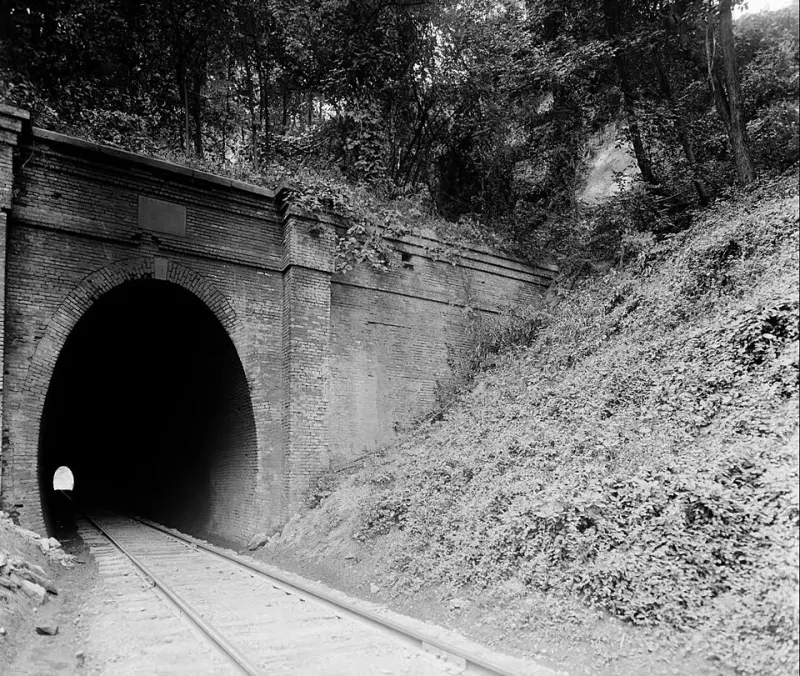
For much of American preservation history, the answer defaulted to architectural distinction or association with prominent individuals. A building needed to look important or be connected to someone important. The tunnel at Tunnel Hill, by contrast, derived its significance not from aesthetics but from the human story embedded in its construction and its role in one of the most consequential conflicts in American history.
Mark Calloway, executive director of the Appalachian Heritage Alliance, credits the Tunnel Hill Heritage Center with helping shift that evaluative lens. "They made a compelling argument that significance is not always visible from the outside," he said. "Sometimes it's encoded in the geology, in the labor records, in the community memory surrounding a site. Tunnel Hill gave us a language for articulating that to funding bodies that had never considered it."
The ripple effects have been concrete. In 2019, the Ohio Historic Preservation Office revised its site evaluation rubric to include expanded criteria for industrial and labor-associated properties — a change its director, speaking on background, acknowledged was influenced in part by case studies emerging from Georgia's preservation community, Tunnel Hill among them.
Policy Conversations and Unexpected Allies
Perhaps the most surprising dimension of Tunnel Hill's influence has been its reach into federal policy discussions. When the National Park Service convened a working group in 2021 to examine gaps in the National Register of Historic Places — specifically the underrepresentation of industrial and working-class sites — staffers from the Tunnel Hill Heritage Center were among those invited to contribute testimony.
Congresswoman Louise Hartwell, whose district encompasses several former industrial communities in western Pennsylvania, cited the center by name during a 2022 subcommittee hearing on cultural heritage funding. "Places like Tunnel Hill are demonstrating that preservation is not a luxury reserved for the wealthy or the architecturally spectacular," she said. "It is a civic responsibility with direct implications for how communities understand their own identity and economic potential."
The connection between preservation and economic revitalization is one the Tunnel Hill Heritage Center has long emphasized. Heritage tourism, the center has consistently argued, is not merely a nostalgic exercise — it is a driver of local economies, particularly in rural and post-industrial communities that have few other levers for sustainable development.
A Model Others Are Studying
Museum professionals from across the country have made the journey to Tunnel Hill not simply as tourists but as students. The center's interpretive approach — which layers archaeological evidence, oral history, primary documents, and immersive programming — has been examined by institutions seeking to overhaul their own exhibits on industrial and labor themes.
The Henry Ford Museum in Dearborn, Michigan, one of the country's most prominent institutions dedicated to American industrial history, sent a delegation of curators to northwestern Georgia in 2020. According to a subsequent internal report obtained through a public records request, the visit informed revisions to the museum's interpretive strategy around worker experience and community impact.
"What Tunnel Hill does exceptionally well," said curator Dana Forsythe of the Illinois State Museum, "is resist the temptation to make the machine the hero of the story. The people who built the infrastructure, who maintained it under brutal conditions, who lived in its shadow — they are centered in a way that industrial museums have historically struggled to achieve."
The Work That Remains
Despite the recognition it has earned, the Tunnel Hill Heritage Center is candid about the distance that remains between the present state of industrial preservation in America and what a comprehensive, equitable approach would require. Hundreds of significant sites continue to deteriorate without adequate protection. Funding mechanisms remain inconsistent. And the communities most directly connected to industrial heritage — often working-class, often rural, often composed substantially of people of color — continue to face systemic barriers in advocating for their own histories.
The center's influence, its leaders are careful to note, is less about institutional prestige than about demonstrating what is possible when a community commits to telling a complete story.
"We didn't set out to become a national model," said one longtime member of the center's preservation staff. "We set out to make sure this place wasn't forgotten. The fact that others found something useful in that effort — that's gratifying. But the work here still comes first."
For the historians, policymakers, and fellow preservationists who have looked to Tunnel Hill for inspiration, that grounded perspective may itself be part of the lesson. The most durable changes in how a society remembers itself rarely begin with grand pronouncements. They begin, as they did here, with a decision that something worth saving should not be allowed to disappear.