Rewriting the Region: How Tunnel Hill's Research Has Transformed Civil War and Labor History Far Beyond Its Borders
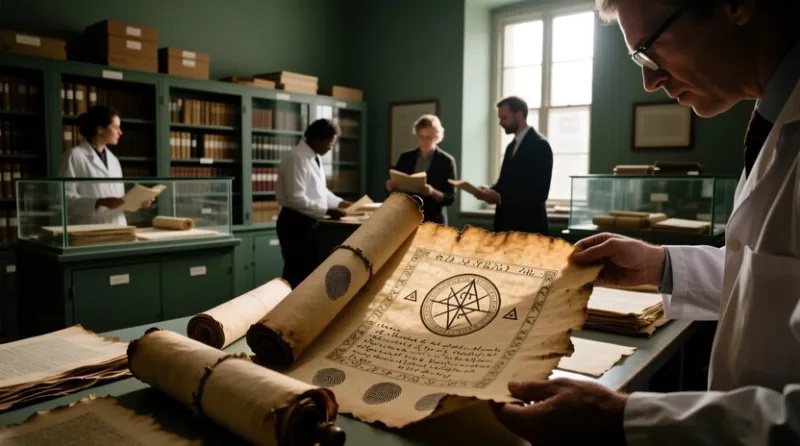
Photo: historian researcher examining archival documents in heritage library, via images.stockcake.com
When a heritage site commits itself fully to accuracy — not merely to commemoration — the consequences extend well beyond its own grounds. Over the past two decades, the Tunnel Hill Heritage Center has done precisely that, pursuing archival research, oral history documentation, and collaborative scholarship with a rigor that has quietly but decisively altered the historical record for an entire region. What was once understood as a peripheral chapter in Civil War and labor history is now recognized as a pivotal one, and that transformation carries the unmistakable imprint of work done on this hill.
A Single Site, a Broader Reckoning
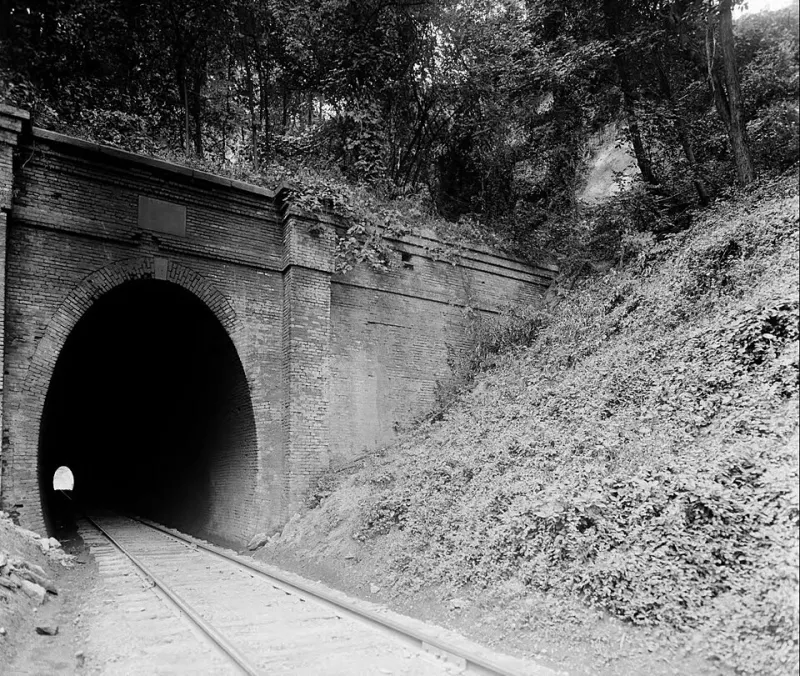
For much of the twentieth century, Tunnel Hill occupied a modest footnote in regional histories — noted for its engineering achievement, acknowledged as a Civil War landmark, but rarely examined with the depth its layered story deserved. The heritage center's sustained investment in primary-source research began to change that calculus.
Archivists and historians affiliated with the center undertook systematic reviews of railroad company records, military dispatches, and county courthouse documents that had gone largely unexamined for generations. What they uncovered forced a reconsideration of long-held assumptions: about who built the infrastructure that defined this corridor, about the scale of enslaved and coerced labor involved, and about the extent to which Tunnel Hill served as a logistical nerve center during the Civil War rather than a passive geographic feature.
These findings did not remain confined to the center's interpretive panels. They were published in peer-reviewed journals, presented at academic conferences, and shared with state historical societies whose own narratives required revision. The center's research effectively introduced new evidentiary standards into a regional conversation that had, for too long, relied on incomplete documentation and inherited assumption.
Shifting Scholarly Consensus
Perhaps the most significant reinterpretation to emerge from the center's work concerns the labor history of the tunnel's construction. Earlier accounts leaned heavily on the accomplishments of Irish immigrant workers — a narrative that was accurate as far as it went, but incomplete. The center's archival team documented, with considerable precision, the substantial role of enslaved laborers in the project's execution, cross-referencing plantation records, estate inventories, and railroad contractor ledgers to establish both the scale and the conditions of that labor.
This reinterpretation resonated far beyond Tunnel Hill itself. Historians working on parallel projects in Tennessee, Georgia, and Alabama found that the center's methodology offered a replicable framework for recovering similarly suppressed labor histories at other infrastructure sites across the antebellum South. Several academic monographs published in the last decade cite the center's research as foundational, and at least two university history departments have restructured their regional history survey courses in response to the evidentiary record the center helped establish.
The center's work on the Underground Railroad connection — a subject treated with appropriate scholarly caution given the evidentiary challenges — also contributed to a broader regional reassessment. Rather than either romanticizing or dismissing local freedom-seeker narratives, the center modeled a disciplined approach to contested history that other heritage institutions have since adopted as a professional standard.
Influence on Education and Public Memory
The effects on formal education have been measurable. Curriculum developers at the state level have engaged the center's staff as consultants when revising standards for Civil War and Reconstruction history. Teachers from multiple counties attend the center's annual educator workshops, returning to their classrooms with primary-source materials and interpretive frameworks that reflect the most current scholarship rather than outdated survey-textbook summaries.
For younger students, the center's programming has introduced a more honest and more complete version of regional history than previous generations encountered. Children who visit Tunnel Hill learn not only about military strategy and engineering achievement, but about the human beings — enslaved, immigrant, free Black, and white — whose collective labor and suffering shaped the landscape they inhabit. That expanded frame of reference, instilled early, carries consequences for how an entire generation will understand its own place in a longer story.
Public memory, too, has shifted in ways that are harder to quantify but no less real. Community conversations about heritage markers, monument placements, and the naming of public spaces have increasingly drawn on the interpretive work done at the center. Local residents who once had only a vague sense of their region's Civil War significance now possess a more nuanced, more accurate, and ultimately more honest understanding of what happened here and why it matters.
Partnerships That Multiplied the Impact
The center's influence has been amplified by deliberate partnership-building with institutions that extend its reach. Collaborations with regional universities have produced joint research initiatives, graduate student fellowships, and shared digital archives that make primary sources accessible to scholars who may never visit the site in person. State humanities councils have funded programming developed in partnership with the center, distributing its interpretive approach across communities throughout the region.
These relationships have also created feedback loops that benefit the center itself. Academic partners bring new methodological tools to bear on questions the center is actively investigating. Community organizations surface oral histories and family documents that enrich the archival record. The result is a living research enterprise rather than a static institutional collection — one that continues to generate new knowledge even as it disseminates what it has already discovered.
What Rigorous Local History Accomplishes
There is a tendency, in some quarters, to regard local and regional history as inherently limited in scope — valuable to residents and enthusiasts but peripheral to the larger narratives that define national memory. The work of the Tunnel Hill Heritage Center offers a compelling rebuttal to that assumption.
Precisely because the center has insisted on following the evidence wherever it leads, its findings have proven relevant far beyond the immediate geography. The histories of labor, race, infrastructure, and military strategy that converge at Tunnel Hill are not local curiosities. They are threads in the larger fabric of American history, and pulling on them carefully — as the center's researchers have done — reveals patterns and connections that broader surveys routinely miss.
The hill has always carried more history than casual observation suggests. The heritage center's enduring contribution has been to make that history legible, not only to visitors who walk these grounds, but to scholars, educators, and communities across a region still engaged in the ongoing work of understanding who they are and how they came to be.
That work is not finished. It may never be. But the standards set here, and the stories recovered here, have already changed the terms of the conversation — and that change, unlike so much else, is unlikely to be undone.