Evidence, Legend, and the Long Shadow of Freedom: Tunnel Hill's Contested Connection to the Underground Railroad
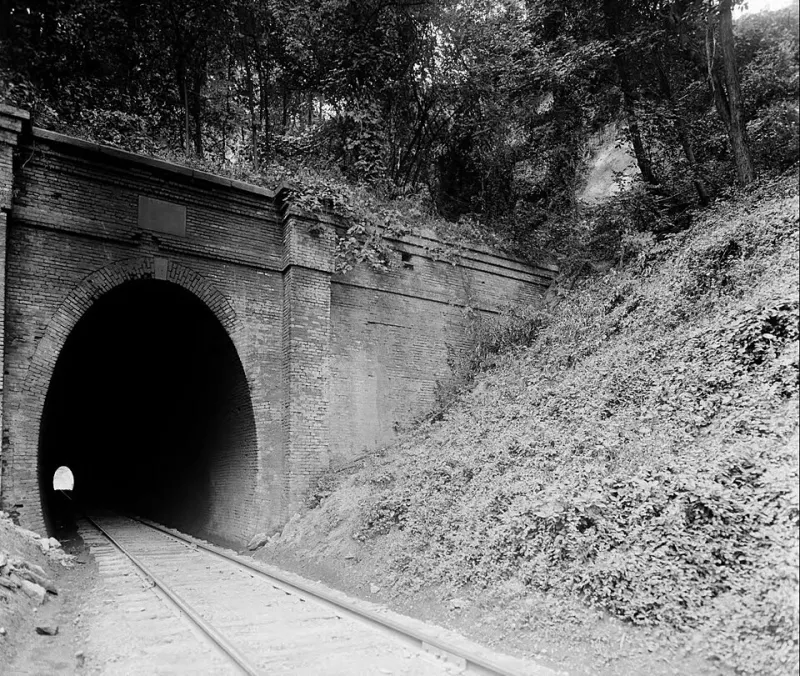
Photo: Holsinger, Rufus W., Public domain, via Wikimedia Commons
Few questions in American local history generate more passion—or more confusion—than whether a particular site served as a station on the Underground Railroad. Tunnel Hill is no exception. For decades, residents, visitors, and heritage advocates have debated the extent to which this remarkable stretch of northwest Georgia terrain may have sheltered freedom seekers making their way northward in the antebellum era. The Tunnel Hill Heritage Center takes seriously its responsibility to engage this question honestly, presenting what the documentary record supports while acknowledging the legitimate weight of community memory.
What the Historical Record Actually Shows
The Underground Railroad was, by its very nature, a clandestine operation. Participants—whether conductors, station keepers, or freedom seekers themselves—had every reason to avoid creating written records. This fundamental reality complicates efforts to verify Underground Railroad activity at any specific location, and Tunnel Hill is no different from hundreds of other sites across the South and border states that carry such oral traditions.
What historians have documented with reasonable confidence is the strategic geography of the area. The Western and Atlantic Railroad tunnel, completed in 1850, created a significant corridor through the Chetoogeta Mountain ridge. The tunnel's construction drew a diverse labor force to the region, including a substantial number of enslaved workers whose presence is now being more fully integrated into the historical narrative of Tunnel Hill. The movement of people—enslaved, free, and transient—through this corridor during the 1840s and 1850s is not in dispute.
However, the specific claim that the tunnel itself functioned as a deliberate passage for freedom seekers escaping enslavement has not been confirmed by primary source documentation. No verified conductor records, abolitionist correspondence, or period newspaper accounts have surfaced to date that name Tunnel Hill as a designated station or route. Scholars affiliated with the Freedoms Frontier National Heritage Area and independent researchers who have examined Georgia's antebellum geography have noted this evidentiary gap while stopping short of ruling out the possibility entirely.
Geography as Argument: The Case for Plausibility
If the documentary record is thin, the geographic argument for plausibility is considerably stronger. The tunnel represented one of the few reliable passageways through a mountainous terrain that otherwise presented significant obstacles to travel on foot. Anyone moving northward through this region—whether legally or otherwise—would have encountered the same topographic realities that made the tunnel so valuable to railroad engineers in the first place.
The proximity of Tunnel Hill to the Tennessee border is also relevant. Freedom seekers moving toward the relative safety of the Ohio River valley or beyond would have needed to navigate through Tennessee, and the mountain corridor offered potential concealment that the open flatlands to the west did not. Local historians have long pointed to this geographic logic as a reason to take the oral traditions seriously, even in the absence of written corroboration.
Additionally, the region's population of free Black residents and mixed communities in the surrounding counties provided a social infrastructure that, in other documented Underground Railroad corridors, often supported clandestine movement. Whether that infrastructure functioned similarly here remains an open question.
Oral History and Descendant Communities
Perhaps the most compelling—and the most contested—evidence comes from the oral traditions preserved within descendant communities in the Tunnel Hill area. Several families with deep roots in Walker and Whitfield Counties carry stories passed down across multiple generations that describe ancestors either aiding freedom seekers or traveling through the area themselves during the antebellum period.
The Tunnel Hill Heritage Center has worked in recent years to document these accounts through recorded interviews and community history projects. What these testimonies reveal is a layered and sometimes contradictory picture. Some accounts describe specific hiding places—root cellars, sympathetic farm households, dense woodland corridors—that align with patterns documented at verified Underground Railroad sites in other states. Others are more impressionistic, conveying a general sense of the area's significance to African American memory without specifying operational details.
Oral history, as a discipline, demands both respect and critical scrutiny. These accounts represent genuine community knowledge and should not be dismissed simply because they lack written counterparts. At the same time, responsible historical practice requires acknowledging that memory transmitted across generations can absorb embellishment, conflation, and the influence of broader cultural narratives about the Underground Railroad—narratives that have, in some documented cases across the country, led to the misattribution of sites.
The Myth Problem in Underground Railroad History Nationally
Tunnel Hill's situation is far from unique. Historians Cheryl Janifer LaRoche, Fergus Bordewich, and others have written extensively about the national tendency to overclaim Underground Railroad connections, a phenomenon driven by genuine local pride, the romantic appeal of resistance narratives, and, in some cases, tourism incentives. Studies have found that the number of sites claiming Underground Railroad significance vastly exceeds what the documentary record can support.
This does not mean that the Railroad was a myth—it was very real, and it operated across an astonishing geographic range. It does mean that the desire to claim a piece of that history has sometimes outpaced the evidence. Recognizing this pattern is not an act of skepticism toward the courage of freedom seekers or their allies; it is an act of respect for the actual historical record and for the communities whose ancestors lived it.
For Tunnel Hill, the honest position is one of documented possibility rather than confirmed fact. The geography supports the plausibility of Underground Railroad activity. The oral traditions of descendant communities deserve serious consideration and continued documentation. The absence of primary source confirmation is a gap that future archival research may yet narrow.
What Continued Research Might Reveal
The Tunnel Hill Heritage Center remains committed to supporting ongoing historical inquiry into this question. Archival collections at the Georgia Archives, the Chattanooga History Center, and various university libraries hold materials that have not yet been fully examined through the specific lens of Underground Railroad research. Church records, estate inventories, and the papers of abolitionist networks operating in the upper South may yield new leads.
Collaboration with descendant communities will remain central to this effort. The stories held within those communities are not merely anecdotal color; they are historical sources that deserve the same rigorous documentation and analysis applied to any written record. The Heritage Center's ongoing oral history initiative reflects that commitment.
What Tunnel Hill offers visitors and researchers alike is something genuinely valuable: a site where the complexity of American historical memory is visible on the surface, where the tension between documented fact and living tradition can be examined honestly and without false resolution. That complexity is itself a form of historical truth, and it is one that the Heritage Center is proud to present.
The hill has carried many stories. The work of understanding which ones are supported by evidence, and which belong to the realm of cherished legend, is ongoing—and it is work worth doing.