What Did the Hill Sound Like? Rebuilding the Audio of a Vanished Railroad Town
Visitors standing at the western portal of the tunnel today often remark on the quiet. Grass covers the old rail bed. The wind moves through the pines. It is, by modern standards, a peaceful place.
It was nothing of the sort in 1860.
Historians have reconstructed what the buildings looked like, what the timetables said, even what the workers earned. But until recently, almost no one had asked a deceptively simple question: what did all of it sound like? That question has become the driving force behind one of the most ambitious projects ever undertaken at Tunnel Hill Heritage Center — a full historical soundscape reconstruction of a working 19th-century railroad town.
The Science of Listening Backward
Historical soundscape reconstruction, sometimes called acoustic archaeology, is an emerging discipline practiced at only a handful of sites across the United States. Its premise is that sound is a primary historical document — one that evaporates the moment it is produced, leaving behind only indirect evidence.
That evidence, however, is richer than most people assume. Court records from nearby Dalton include noise complaints. Railroad company correspondence specifies whistle signal codes and their durations. Freight manifests reveal how many livestock pens operated along the line, each contributing its own layer of animal sound. Even the physical landscape itself is a document: the cut through the hill, the wooden trestle spans, and the hard brick of the depot all shaped how noise traveled.
"You cannot understand a railroad town with your eyes alone," the project's lead curator explains. "Sound was the clock, the alarm system, and the newspaper of the 19th century. People read their world by ear."
From Blueprint to Broadcast
The reconstruction process unfolded in three phases.
First came the archival sweep. Researchers combed railroad engineering drawings to determine the precise dimensions of the tunnel — a critical detail, because the bore acted as a resonance chamber that stretched and deepened any sound passing through it. Period photographs were examined for surface materials: plank boardwalks, gravel yards, and packed clay roads each produce a distinct acoustic signature underfoot.
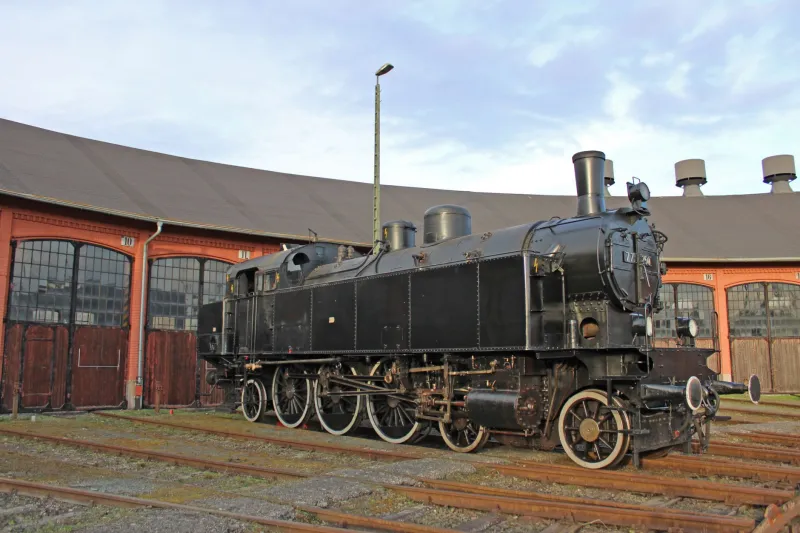
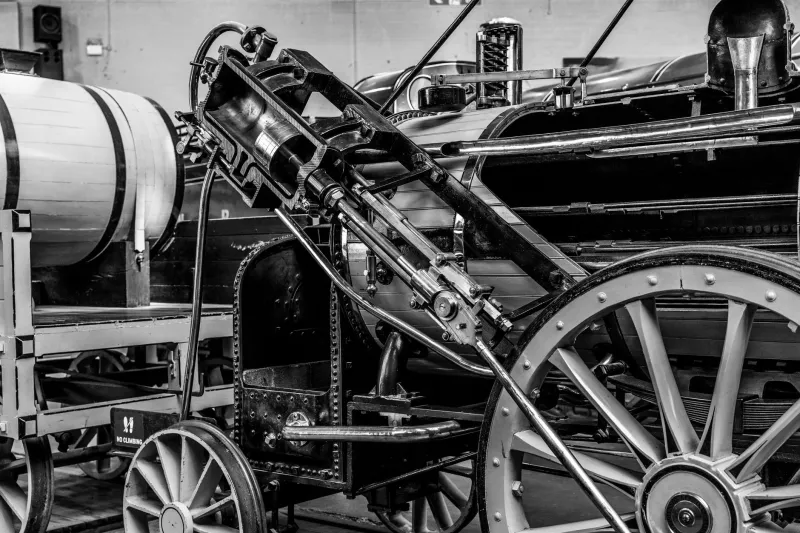
Second came replication. The team commissioned working reproductions of period tools and equipment — a hand-cranked forge blower, cast-iron cookware, and, most challenging of all, a steam whistle built to the specifications of a Civil War-era locomotive. Each was recorded in controlled conditions using calibrated microphones.
The final phase was placement. Acoustic researchers from a Georgia university partner modeled how sounds would have interacted with the town's actual geography — how the whistle's note would echo off the cut, how a hammer strike at the blacksmith shop would carry differently in summer's humid air than in winter's cold.
The Whistle Problem
No single sound proved harder to recreate than the locomotive whistle. Surviving railroad documents describe pitch in relative terms — "a high, mournful blast" — but 19th-century notation offers little help to a modern audio engineer.
The breakthrough came from an unexpected source: hymnals. Whistles were commonly tuned by ear to musical notes familiar to their makers, and surviving engine shop records from the region reference tuning to the key of E-flat. Using that clue, plus the physics of period boiler pressure, the team produced a tone that veteran railroad historians describe as startlingly authentic — lower and sadder than the shrill whistle most Americans carry in their imagination.
Why the Ear Remembers
The reconstructed soundscape now anchors an enhanced tour experience at the Heritage Center, delivered through discreet directional speakers at key points along the site. Visitors report that hearing the tunnel — rather than merely walking through it — changes the encounter entirely.
There is science behind that reaction. Research in experiential learning suggests that multisensory engagement deepens memory retention substantially, and sound in particular reaches emotional memory in ways visual displays rarely do. A photograph of a locomotive is information. The sound of one bearing down through a mountain tunnel, felt as much as heard, is an experience.
For younger visitors raised on immersive digital media, the effect is especially pronounced. Docents note that children who might hurry past a display case will stand motionless for a full minute, listening to the layered soundscape of a workday morning in 1862.
A Tool for Preservation Everywhere
The team has made its methodology freely available to other heritage sites, publishing its recording standards and acoustic modeling templates for any small museum to adapt. The response has been enthusiastic — particularly from sites that, like Tunnel Hill, preserve places whose original sounds are gone but whose physical settings remain largely intact.
That, curators say, may be the project's lasting contribution. Buildings can be restored. Artifacts can be conserved. Sound, once lost, seemed gone forever — until now.
The quiet at the tunnel's mouth, it turns out, was never really silence. It was just history waiting for someone to press play.