The Label Is an Argument: How Fifty Words Shape What Visitors Remember
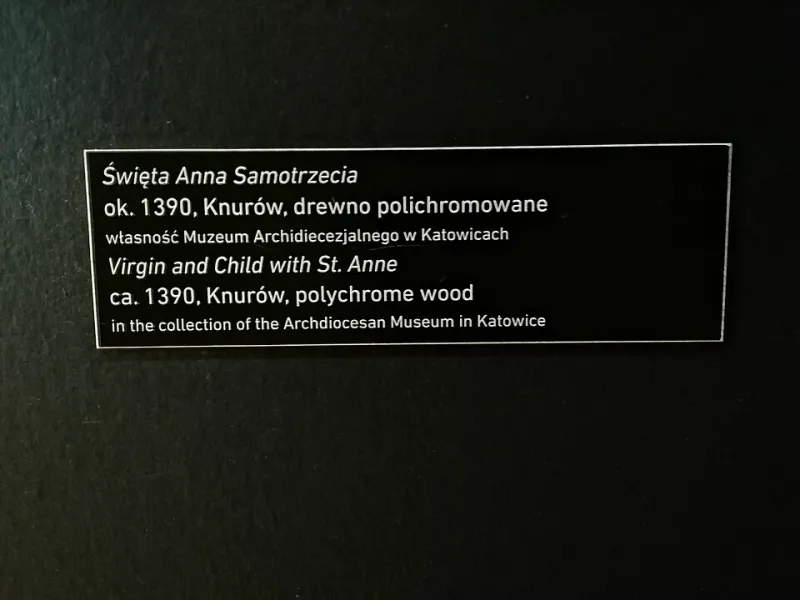
Photo: Abraham, CC0, via Wikimedia Commons
A museum label looks like a caption. It is actually an argument. In fifty words, a label decides what an object is, why it matters, and what a visitor should notice first. At Tunnel Hill, those small cards are among the most powerful tools in the building. They are also among the most contested. The words are written, edited, argued over, and sometimes quietly revised. Understanding that process can change the way travelers read every exhibit they encounter.
A Label Is a Compression
An artifact may have a long history, several owners, and an uncertain function. A label cannot hold all of that. It must compress. Compression is not neutral. To choose one fact is to leave out another. To call an object a tool is to imply a use. To call it a relic is to imply a mood. To date it to a decade is to accept a range of uncertainty. Good label writing begins with the admission that the card is a selection, not a summary of everything known.
At the Hill, labels must serve several audiences at once: the casual visitor, the serious history buff, the child on a school trip, and the traveler who has only a few minutes. That is a lot of weight for a card the size of a postcard. The temptation is to write for the imagined expert and let everyone else keep up. The better approach is to write for the curious visitor and let the expert find more in a catalog or a tour.
The Fight Over the First Sentence
Most label arguments are really arguments about the first sentence. A first sentence can establish agency: who made this, who used it, who was excluded. It can establish scale: this was one of thousands, or this was the only one. It can establish tone: triumph, tragedy, routine, or ambiguity. Editors often push for clarity. Historians often push for accuracy. The best labels find a way to be both clear and honest about uncertainty.
A useful test is to ask what a visitor would remember if they read only the first line. If the answer is a date, the label may be wasting its strongest moment. If the answer is a person, a conflict, or a question, the label is doing its job.
What Gets Revised and Why
Labels are revised for many reasons. New research emerges. A donor provides a correction. A term falls out of use. A visitor asks a question that reveals a gap. Sometimes a label is revised because the institution has changed its mind about what it wants to emphasize. Those revisions are not scandals. They are evidence that interpretation is alive.
Travelers should notice when a label feels old-fashioned, not because old labels are always wrong, but because language carries assumptions. A label that calls a worker a helper may be hiding a labor relationship. A label that calls a town quiet may be ignoring the people who did not experience it as quiet. A label that lists a manufacturer but not the people who operated the machine is making a choice about whose skill matters.
How to Read a Label Critically
Visitors can read labels more critically without becoming suspicious of everything. Ask three questions. What is the label asking me to feel? What is it asking me to overlook? What would I need to know to disagree with it? Those questions do not require expertise. They require attention.
A label is also a physical object. Its height, type size, contrast, and placement all shape access. A card written for a standing adult may fail a child or a wheelchair user. A dense paragraph may lose a visitor with low vision or limited reading time. Good interpretation considers both the words and the body that will meet them.
The Ethics of the Small Card
The small card is an ethical space. It can make a person visible or disappear them. It can invite questions or close them down. At Tunnel Hill, the goal should not be to write labels that settle the past. The goal should be to write labels that give visitors a fair start. Fifty words cannot do everything. They can do more than most visitors expect.