One Anchor, Many Stories: Building a Walkable History Route Around a Single Landmark
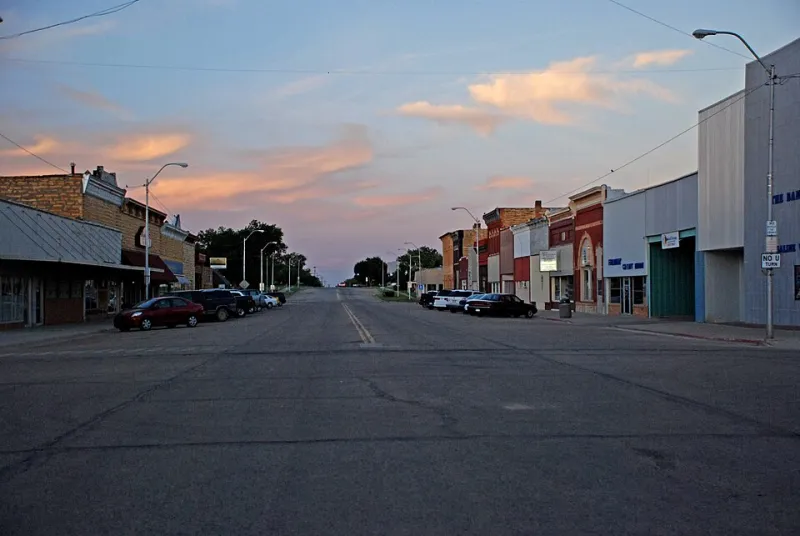
Photo: Faith Wilson from Woodinville, WA, U.S.A., CC BY-SA 2.0, via Wikimedia Commons
Start With the Landmark, Then Look Up From It
Every heritage traveler knows the ritual: you arrive at the famous site, take the tour, read the wayside exhibits, and stand in the parking lot wondering what to do next. Too often, the answer is to get back in the car. But in most small American towns, the landmark is not the story — it is the first chapter.
Tunnel Hill illustrates the pattern. The tunnel itself is the anchor, the reason the town exists at all. But walk a few blocks in any direction and the supporting cast appears: the depot that received soldiers and freight, the church congregations that formed within a decade of the railroad's arrival, the family cemeteries whose headstones record the epidemics, wars, and rail accidents that official markers summarize in a sentence. A single attraction becomes a corridor the moment a visitor decides to read the surrounding blocks the same way they read an exhibit hall.
How to Build Your Own Heritage Walk
You do not need a town to have done the work for you, though many have. A methodical self-guided approach looks like this:
Begin at the visitor center or historical society. Even towns without formal museums usually have a historical society, a library local-history room, or a chamber of commerce with a photocopied walking map. Ask one question: what else from the original era is still standing? The answer almost always produces more than a day's worth of stops.
Follow the era, not the plaques. If your anchor site dates to the 1850s, look for what else survives from the 1850s — building foundations, road alignments, church rolls, cemetery inscriptions. Continuity of period turns scattered sites into a coherent narrative.
Read the cemeteries. No document in a small town is more honest than its burying ground. Occupations, birthplaces, fraternal lodge memberships, and the clusters of dates that mark yellow-fever summers or mining disasters are all carved in stone, free to read, and usually within walking distance of the town center.
Talk to the people at the counter. The person at the gas station, the café, the post office. In towns of fewer than 5,000 people, the oral history is often three generations deep and available for the price of a cup of coffee.
Towns That Mapped It First
The heritage corridor model is well established across the country, and Tunnel Hill's own neighborhood fits a national pattern. Harpers Ferry, West Virginia, anchors a corridor of trails and waysides radiating from its historic lower town. Galena, Illinois, converted its entire downtown into a de facto museum of a Mississippi River port boomtown. Jonesborough, Tennessee, the state's oldest town, layers its storytelling tradition onto a walkable grid of eighteenth- and nineteenth-century structures. In each case, the anchor attraction functions as a doorway, not a destination.
Georgia's own heritage tourism infrastructure encourages exactly this model, linking railroad towns, mill villages, and Civil War sites into regional routes where travelers can spend a day on foot and an evening in a historic downtown.
Why the Corridor Matters More Than the Landmark
There is a preservation argument hiding inside the travel argument. When visitors treat a town as a corridor, they distribute their time and money across Main Street, not just the ticket booth. That distributed economic benefit is what convinces a town council to fund a façade grant or oppose a demolition. Walking routes, in other words, are preservation strategy disguised as tourism.
So the next time you visit a single famous site, budget two extra hours and ten extra blocks. The tunnel, the battlefield, or the depot will still be there when you return — but the houses, headstones, and storefronts around it are the pages between the chapters, and they only open to those who walk.