The Counter at the Door: What a Museum Gift Shop Reveals About Who History Belongs To
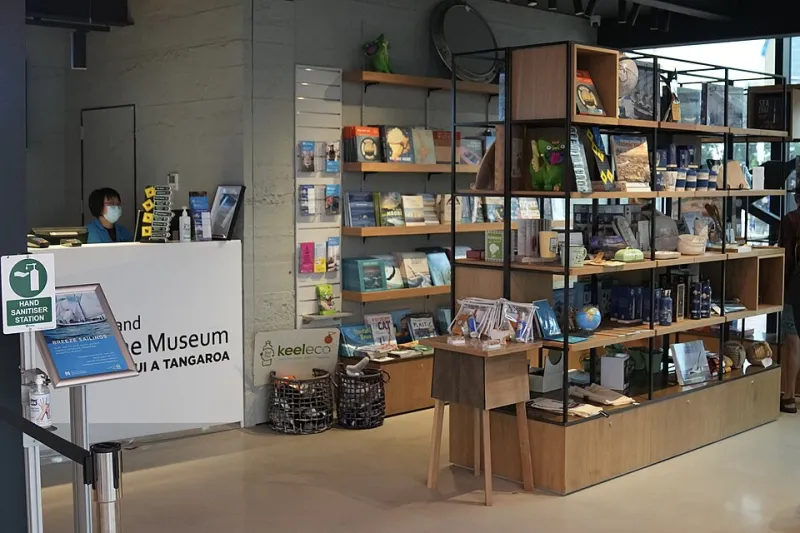
Photo: Richard N Horne, CC BY-SA 4.0, via Wikimedia Commons
Every museum in America has a final gallery, whether curators admit it or not. It is the room visitors pass through on the way out, the one with the register hum and the shelves of tin signs and plush toys. We rarely write interpretive panels about the gift shop, but perhaps we should. What a heritage site chooses to sell is a cultural statement — a compressed argument about who history belongs to and what it means to take a piece of it home.
The Last Room Speaks First
Visitors often assume the gift shop is an afterthought, a commercial concession tacked onto the serious work of preservation. In practice, it functions as a thesis statement. A shop stocked with generic nostalgia — the same Confederate-adjacent tin signs, the same 'Gone But Not Forgotten' magnets sold from Gettysburg to Gatlinburg — tells the visitor that history is a product, interchangeable and placeless. A shop stocked with goods made within a few miles of the site tells a different story: that this place has a specific past, carried by specific people, and that remembering it is a local act, not a national one.
The distinction matters more at small heritage sites than at marquee institutions. A visitor to the Smithsonian expects abstraction; history there is the nation's story told at scale. A visitor to a railroad town in northwest Georgia expects particularity. When the retail counter undercuts that expectation with the same keychains available at any interstate exit, the site quietly dilutes its own interpretive work.
Mass-Produced Memory and Its Costs
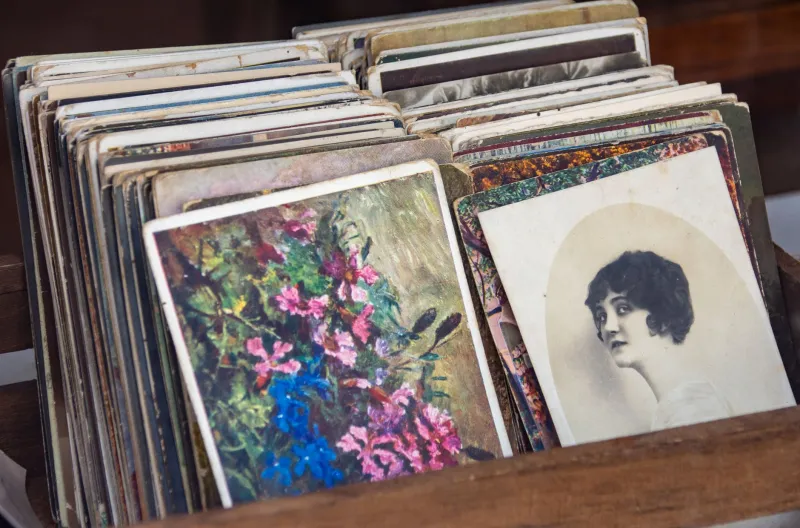
To be fair, mass-produced souvenirs exist for understandable reasons. They are cheap to source, predictable in margin, and familiar to travelers. A family on a road trip may have twenty dollars to spend, and a resin locomotive satisfies a child in ways a hand-thrown pottery bowl cannot. There is a democratic argument for the inexpensive keepsake: memory should not be a luxury good.
But the economics of convenience carry a curatorial cost. When the same pennants and shot glasses appear at every historic site in the country, they flatten the very thing heritage sites exist to preserve. The souvenir becomes a receipt for attendance rather than a vessel for meaning. Worse, generic merchandise often lags behind a site's scholarship. A museum that has spent years restoring the voices of enslaved workers, or documenting the immigrant laborers who built its tunnel, cannot reconcile that work with a shelf of jokey 'Old Timey' signs without a certain dissonance settling over the whole visit.
What the Hill Chooses to Sell
Tunnel Hill's own shop offers a useful case study in the alternative. Alongside the expected postcards and children's activity books sit goods with provenance: honey from hives kept in the county, crafts from regional artisans, books printed by small Georgia presses about the Western & Atlantic Railroad and the Civil War campaigns that moved through Whitfield County. A visitor who buys a locally authored history of the Great Locomotive Chase is not merely purchasing a memento; they are extending their visit into their living room, carrying forward an interpretation the site itself endorses.
This is not to claim perfection, and it would be dishonest to suggest the shop contains nothing imported. Small sites operate on thin margins, and the practical realities of inventory are real. But the ratio tells the story. When the majority of goods are traceable to the region — when the spoon was forged by someone who can stand in the shop and explain it — the retail space becomes a functioning part of the exhibit, a final panel in three dimensions.
The Deeper Question on the Shelf
Underneath the merchandising decisions lies a genuine philosophical divide. One view holds that history belongs to everyone, and therefore should be packaged in the most accessible, least intimidating forms possible. The other holds that history belongs, first, to the places and communities that lived it, and that visitors are guests being trusted with something particular.
Both views contain truth, and the best gift shops honor both: the affordable keepsake for the child, the researched monograph for the serious student, the artisan object that funds a neighbor's livelihood. What neither view supports is the placeless souvenir — the item that could be sold anywhere and therefore means nothing anywhere.
A Standard Worth Defending
Heritage sites are, by definition, in the business of resisting the interchangeable. We restore the specific building, document the specific family, preserve the specific whistle of the specific train. It would be strange to surrender that commitment at the cash register.
So consider the gift shop a final act of interpretation. Ask where the objects came from, who made them, and what story they tell when they arrive home in a suitcase. A good museum shop should pass the same test we apply to our exhibits: does it deepen the visitor's connection to this place, or does it merely mark time spent near it? On the Hill, we believe the answer should always be the former — and we think the shelves can prove it.