Ink, Water, and Iron: The Handwritten Ledger That Outlived Every Engineer on the Payroll
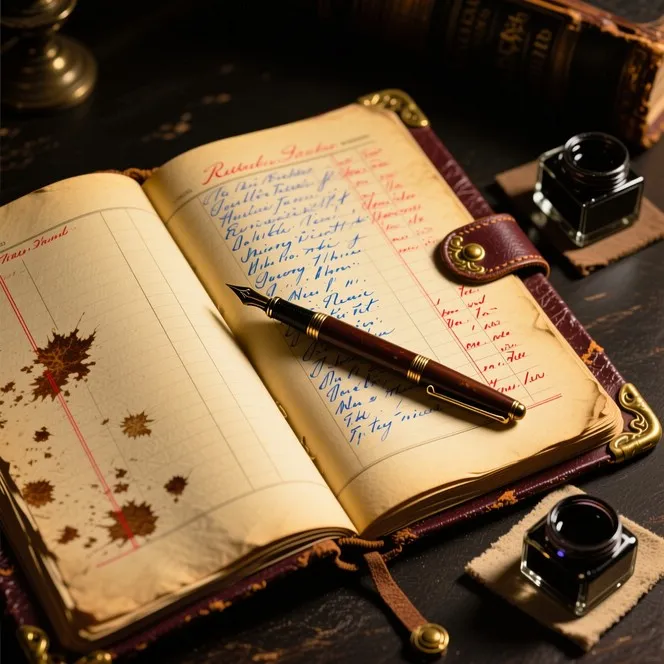
Photo: antique leather ledger book with handwritten entries on wooden archive shelf, via images.stockcake.com
There is a shelf in the archive room at Tunnel Hill that most visitors walk past without a second glance. On it sit a series of bound volumes—leather cracked, corners softened by a century and a half of damp hands and hurried entries. These are the tunnel's maintenance logs, and to the untrained eye they are tedious: dates, weather notes, measurements of a crack here, a drainage complaint there. To a historian, they are something else entirely. They are the longest continuous conversation about American infrastructure ever conducted in pencil.
The Men Who Wrote the Walls
Railroad corporations of the nineteenth century were famously indifferent to documentation. Stock ledgers, passenger manifests, and freight rates were recorded with precision because money demanded it. The physical condition of a tunnel bored through northwest Georgia limestone? That was left to whoever happened to be standing nearest the problem.
And so the logs began. The earliest surviving volumes read like dispatches from a frontier of stone. Entries note the date a section of crown masonry was re-pointed, the depth of standing water after a spring storm, the number of cartloads of debris hauled out by lantern light. The handwriting shifts from volume to volume—a reminder that this was not one caretaker but a succession of them, each inheriting the ledger from the last like a family Bible.
What emerges across 170 years of entries is a portrait of labor that no official corporate history ever recorded. These were not engineers with degrees. They were men who learned the tunnel the way a physician learns a patient—by touch, by sound, by the smell of water where water should not be.
Reading Between the Repairs
The logs reward patient reading because the most important information is often what is not said. A terse entry in one volume—"water rising, west portal, three days"—takes on new weight when the next page records a work crew dispatched with pumps and timber. A gap of several weeks during the Civil War years tells its own story; the tunnel changed hands, and maintenance, like everything else, gave way to survival.
Later volumes show the quiet professionalization of the work. Measurements become more systematic. Sketches appear alongside text. By the twentieth century, the entries adopt the clipped language of inspection forms, yet the old habits persist—notes on the weather, on the mood of the rock, on how a familiar seep "behaved" after a hard freeze.
Preservationists today draw on these records the way a physician draws on family history. When a modern survey identifies a stress point in the masonry, the logs can often reveal whether that section has been repaired before, when, and with what materials. That knowledge changes everything about how a restoration is approached. You do not patch over a century of prior decisions; you read them first.
What the Ledger Teaches About a Nation's Habits
There is a larger lesson in these volumes, and it extends well beyond a single passage in Georgia. America built an astonishing amount of infrastructure in the nineteenth century and then, largely, forgot to write down how it was kept alive. The romantic narrative credits visionary engineers and grand financing. The ledger tells a humbler truth: infrastructure survives because someone came back the next morning, and the morning after that, and wrote it down.
Historians of technology have begun to call this "maintenance history"—the study of upkeep rather than invention. Tunnel Hill's logs are a rare primary source in a field starved for them. They document not the triumph of construction but the unglamorous persistence of care, and they suggest that the true engineering achievement of the American railroad age was not building these structures once, but keeping them standing through war, flood, depression, and neglect.
Why the Logs Still Matter
Visitors to the Heritage Center can view selections from the maintenance records in the archive display, and docents frequently use them in educational programming—particularly with students, who respond to the immediacy of handwriting over the abstraction of a textbook. There is something affecting about watching a teenager trace a penciled note from 1880 and realize the writer was worried about the same water seep a modern inspector flagged last spring.
The logs are also a reminder of what preservation actually means. Saving a structure is not a single act but a relay race across generations, each runner passing along what they learned. The men who filled these volumes never imagined scholars would study their spelling or their shorthand. They simply did the work and recorded it, because the tunnel required it.
That, in the end, may be the most American document on the shelf: not a declaration or a contract, but a working person's honest account of a hard day's repair, written in the hope that someone would come after and need to know.