Celebration Without Caricature: What the Semiquincentennial Should Ask of the Hill

Photo: United States Mint, Public domain, via Wikimedia Commons
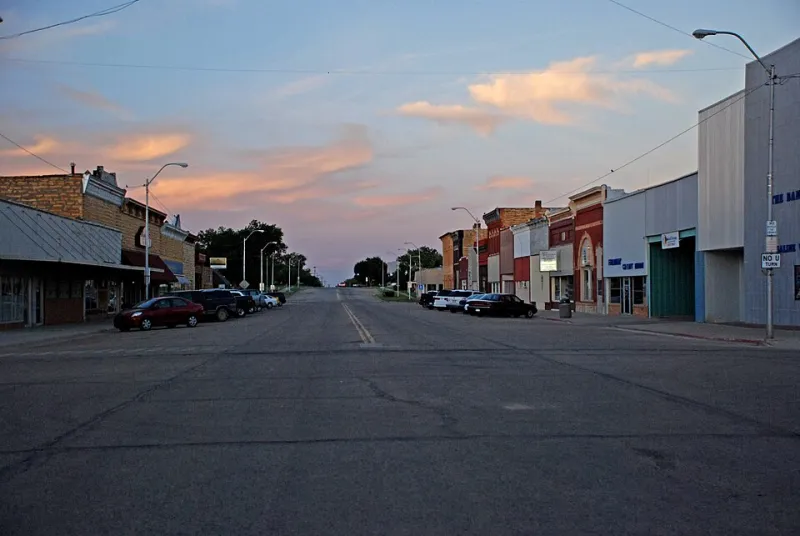
The semiquincentennial arrives in 2026 with banners, grants, and a familiar invitation: tell the nation's story. For a small railroad town with a large historical footprint, that invitation is both an opportunity and a test. Tunnel Hill can host a birthday party without turning its past into a parade float. The question is not whether the Hill should mark the 250th anniversary of the United States. It is how the Hill can mark it without flattening local history into patriotic shorthand.
The Temptation of the Grand Narrative
National anniversaries reward compression. A site can be tempted to reduce a complicated place to a handful of uplifting scenes: the brave engineer, the loyal community, the flag over the depot. Such scenes are not false so much as incomplete. They leave out the workers who laid track in dangerous conditions, the immigrants whose names appear in payroll ledgers, the enslaved people whose labor is documented in fragments, and the ordinary travelers who passed through and left little trace. A commemorative program that omits those people is not a national story. It is a selected story.
The pressure is real. Funding cycles favor projects tied to the anniversary. Visitors arrive in 2026 expecting something to happen. Local officials want a share of the attention. None of that requires a site to surrender its own ledger. In fact, the strongest anniversary programming often begins with a simple refusal: we will not pretend that the Hill's history is simpler than it is.
A Local Ledger for a National Anniversary
A more honest approach is to treat the semiquincentennial as a prompt for research rather than a template for celebration. What can the Hill document that speaks to 1776 and 2026 at the same time? The answer may be less about grand events and more about ordinary structures: who worked here, who was excluded, who stayed, and who moved on. A railroad town is a useful place to ask those questions because it was never isolated from national currents. Tracks carried people, goods, and ideas. They also carried conflict.
Programming could take the form of a temporary exhibit built from local records, a series of short talks on labor and migration, or a family workshop that asks visitors to compare a nineteenth-century census entry with a contemporary community survey. The goal is not to make the Hill look important by attaching it to a national date. The goal is to let a national date illuminate what the Hill already contains.
Partnerships That Do Not Flatten
Community partnerships are essential in an anniversary year, but they need clear terms. Schools, libraries, historical societies, and civic groups can bring audiences and expertise. They can also bring pressure to smooth rough edges. A partnership works when each party agrees that complexity is not a public-relations problem. A local church might host a conversation about migration. A library might build a reading list on Reconstruction. A school might invite students to study the language of old advertisements and ask what those advertisements assumed about their readers.
The Hill should also partner with people who are not traditionally part of anniversary planning: descendants, labor historians, disability advocates, and recent arrivals. Their questions may be uncomfortable, but they are the questions that keep a commemorative year from becoming a costume drama.
What Visitors Should Ask in 2026
Visitors have a role too. In an anniversary year, travelers should ask who is missing from the story. They should read labels for what they leave out. They should notice whether a program treats the past as a lesson already learned or as a record still being interpreted. A small museum cannot answer every question, but it can be honest about the edges of its evidence.
The 250th birthday will pass. The Hill will remain. The measure of 2026 will not be how many banners hung from the depot, but whether the commemoration left the site with a deeper record, a wider circle of partners, and a public more willing to see history as a shared argument rather than a patriotic shorthand.