In Their Own Words: The Letters and Diaries That Bring Tunnel Hill's Civil War Soldiers Back to Life
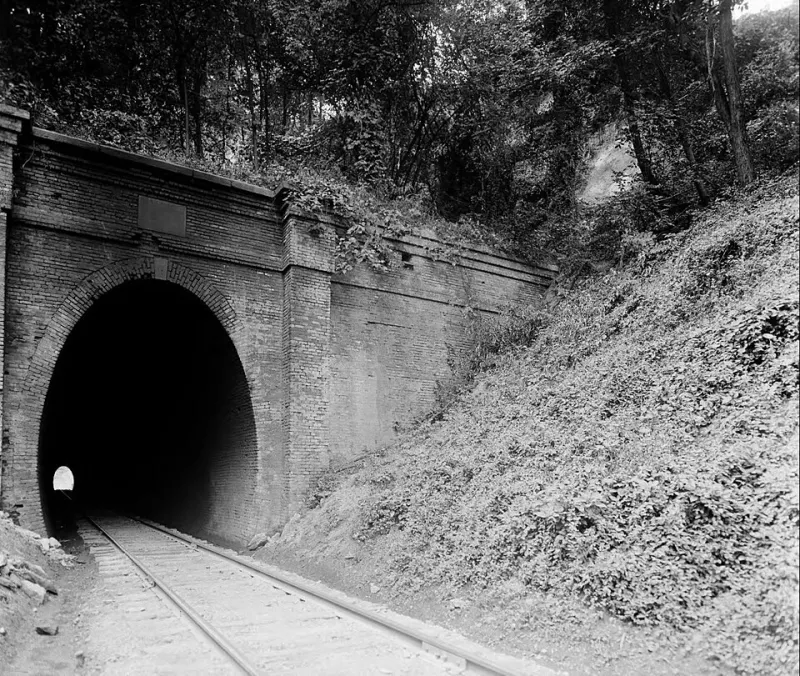
Photo: Tablelegs6, CC0, via Wikimedia Commons
There is a particular quality to handwritten correspondence from the Civil War era that no secondary account can replicate. The ink has faded, the paper grown brittle, but the voice — urgent, homesick, wry, frightened, occasionally funny — remains startlingly present. At the Tunnel Hill Heritage Center, a growing collection of personal letters, diary entries, and soldier testimonies has become one of the most powerful tools available for connecting modern visitors to the lived experience of those who occupied this ground more than 160 years ago.
These documents do not merely supplement the historical record. In many cases, they fundamentally reshape it.
What Official Records Leave Out
Military historians have long relied on official dispatches, regimental reports, and campaign maps to reconstruct the movements and decisions that defined the Civil War's Western Theater. These sources are indispensable — but they were written for specific institutional purposes, and they reflect the priorities of commanders and administrators rather than the perceptions of the men in the field.
Personal correspondence operated under entirely different rules. A soldier writing home to his mother in Ohio or his wife in Georgia had no reason to manage his narrative for posterity. He wrote what he saw, what he felt, and what he feared. He described the smell of the tunnel, the sound of artillery echoing through its bore, the strange peace of a quiet afternoon on the ridge between engagements. He complained about food, speculated about troop movements based on rumor, and asked after the children by name.
For historians and educators at institutions like the Tunnel Hill Heritage Center, these unguarded moments are invaluable. They provide texture and specificity that transform a campaign timeline into something recognizably human.
Voices from Both Sides of the Line
One of the most striking aspects of the primary source collection associated with Tunnel Hill is that it encompasses perspectives from both Union and Confederate soldiers — men who, in many cases, occupied the same ground at different points in the campaign and experienced it in remarkably similar ways.
A Confederate infantryman stationed near the tunnel's southern portal in the spring of 1864 wrote to his sister describing the structure with a mixture of pride and unease: he found it impressive as a feat of construction but unsettling as a place of shelter, noting that the darkness inside felt oppressive after even a short time. Weeks later, a Union soldier who passed through the same tunnel during the Atlanta Campaign recorded a strikingly parallel reaction — the same admiration for the engineering, the same discomfort with the enclosed space, the same relief at emerging into daylight on the far side.
These convergences are not incidental. They remind us that the men on opposing sides of this conflict were, in many fundamental respects, responding to the same landscape, the same physical conditions, and the same psychological pressures. Primary sources make that shared humanity legible in ways that troop movement charts simply cannot.
The Archaeology of a Personal Letter
Historical interpretation of personal documents requires a kind of careful, layered reading that resembles archaeological excavation. What a soldier says explicitly is only one dimension of what a letter reveals. Equally important are the things left unsaid — the gaps, the evasions, the subjects conspicuously avoided.
Many Civil War soldiers wrote with an awareness that their letters might be read by people other than the intended recipient: a letter carried in a mail pouch might be inspected by officers, shared among family members, or read aloud in a community gathering. This awareness shaped what they chose to record. Graphic descriptions of violence were often softened or omitted entirely. Expressions of doubt about the cause or the leadership were sometimes coded in language that would be transparent to a close reader but opaque to a casual one.
Historians working with the Tunnel Hill collection have developed interpretive frameworks for navigating these layers of meaning. A soldier who writes that things are "about as well as can be expected" may be signaling distress to a family member trained to read between the lines. A detailed description of a meal, seemingly trivial, may represent a deliberate effort to anchor a frightened mind in something ordinary and manageable.
For visitors engaging with these documents through the Heritage Center's educational programs, learning to read primary sources in this way is itself a significant and transferable skill — one that changes how people approach historical evidence long after they leave the site.
Lesser-Known Perspectives: Beyond the Officer Class
Historical collections have traditionally skewed toward the literate and the privileged. Officers, who were more likely to have received formal education and more likely to have families who preserved their correspondence, are overrepresented in most Civil War archives. Enlisted men from rural backgrounds, laboring-class immigrants, and African American soldiers — including those who served in United States Colored Troops regiments that operated in the region — appear far less frequently in the written record.
The Tunnel Hill Heritage Center has made a deliberate effort to seek out and amplify these underrepresented voices. Transcribed testimonies collected by postwar pension examiners, oral histories recorded by early 20th-century researchers, and fragmentary diary entries recovered from unexpected sources have all contributed to a more complete portrait of who was actually present at this site and what they experienced.
Among the most affecting of these documents are the testimonies of formerly enslaved individuals who found themselves in the vicinity of the tunnel during the campaign — some as laborers compelled to support Confederate fortifications, others as people seizing the chaos of military movement to seek freedom behind Union lines. Their accounts introduce perspectives that complicate and enrich the conventional military narrative in ways that are both historically essential and deeply moving.
Bringing These Voices Into Your Visit
For families visiting the Heritage Center, the primary source collection offers a particularly effective entry point for younger visitors who might find conventional historical presentations abstract or difficult to connect with emotionally. A letter written by a nineteen-year-old soldier to his younger brother — describing the tunnel, the weather, his homesickness, his hope that the whole business would be over before the harvest — is immediately accessible to a modern teenager in ways that a regimental order of battle is not.
The Heritage Center's educational staff regularly incorporates selected documents into guided tours and classroom programs, pairing written excerpts with the physical locations they describe. Standing at the tunnel portal while listening to a period letter describing that exact spot creates an experiential connection that is difficult to achieve through any other means.
Visitors are also encouraged to spend time in the reading room, where reproductions of selected documents are available for close examination. Staff members are available to assist with the sometimes challenging task of reading 19th-century handwriting and to provide contextual background that helps individual documents come alive.
The Ongoing Work of Preservation
Collecting and interpreting primary sources is not a project with a fixed endpoint. New documents surface regularly — in family attics, estate sales, and the archives of institutions that may not immediately recognize the relevance of what they hold. The Heritage Center actively works with regional historical societies, universities, and private collectors to identify and acquire materials that can deepen the Tunnel Hill story.
Each new document is a new voice added to a conversation that has been ongoing for more than a century and a half. Together, these voices constitute something irreplaceable: a collective memory of a pivotal moment in American history, preserved in the most personal medium available — the words people chose when they sat down, in the middle of a war, to tell someone they loved what it was actually like to be here.