Keepers of the Past: How Community Collectors Are Safeguarding Tunnel Hill's Untold Stories
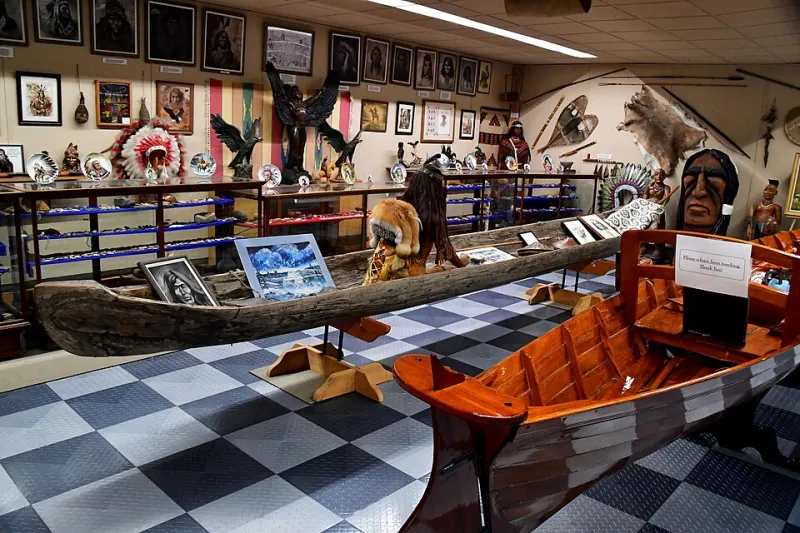
Photo: Eric Friedebach, CC BY 2.0, via Wikimedia Commons
In the climate-controlled galleries of established museums, history often presents itself with polished authority — labeled, catalogued, and framed behind glass. Yet some of the most revealing chapters of Tunnel Hill's past reside not in formal institutions but in the spare bedrooms, basement shelves, and carefully organized storage units of ordinary residents. These private stewards of local memory occupy a vital, if frequently overlooked, role in heritage preservation.
At Tunnel Hill Heritage Center, we have long recognized that community members are among the most committed guardians of regional history. Their collections — ranging from Civil War-era correspondence and railroad workers' pay stubs to hand-stitched quilts and photographs of long-demolished storefronts — represent an irreplaceable dimension of the historical record.
The People Behind the Collections
Martha Calloway has been accumulating Tunnel Hill memorabilia for nearly four decades. What began as a single daguerreotype she inherited from her grandmother has grown into a meticulously organized archive occupying two rooms of her Walker County home. Among her most prized possessions is a ledger from a dry goods merchant who operated near the tunnel's northern entrance in the 1880s, its pages detailing purchases made by railroad laborers and their families.
"People throw these things away without realizing what they're holding," Calloway said during a recent conversation. "A receipt, a photograph, a child's report card — these are windows into lives that would otherwise be completely forgotten."
Her sentiment is echoed by retired schoolteacher Harold Dunmore, whose collection centers on oral history recordings he has conducted since the 1970s. Over the course of three decades, Dunmore interviewed more than sixty Tunnel Hill residents — many of whom have since passed — capturing firsthand accounts of life in the area during the mid-twentieth century. He has digitized a portion of these recordings, though the full archive remains housed in his personal study.
"The stories I recorded in 1978 simply cannot be replicated," he noted. "The people who lived through those years are gone. What remains is what I managed to document."
The Challenges of Preservation Outside Institutional Walls
Private collecting is not without its complications. Unlike museums and heritage centers, individual collectors typically lack access to archival-grade materials, environmental controls, and professional conservation expertise. Paper documents are particularly vulnerable to humidity, light exposure, and acidic deterioration. Textiles face the persistent threats of mold and insect damage. Photographs may fade or become brittle without proper housing.
Financial constraints compound these challenges. Acid-free storage boxes, mylar sleeves, and climate-controlled cabinetry represent meaningful expenses for collectors operating without institutional support or grant funding. Many rely on guidance from publications issued by the National Archives or the Library of Congress, adapting professional recommendations to modest budgets.
There are also legal and ethical dimensions to consider. Questions of ownership, provenance, and the appropriate stewardship of materials that may have cultural significance to broader communities can be complex. Collectors who acquire items from estate sales, for example, may possess little documentation regarding an object's origins or prior ownership history.
Despite these obstacles, the dedication demonstrated by Tunnel Hill's private collectors is remarkable. Their personal investment — in time, resources, and emotional energy — reflects a deep commitment to ensuring that the region's layered history endures.
How Formal Institutions and Private Collectors Can Work Together
The relationship between heritage centers and private collectors need not be adversarial or competitive. In many communities, these two constituencies function as complementary partners, each offering what the other cannot.
Tunnel Hill Heritage Center actively encourages collectors to consider long-term arrangements that protect their holdings while keeping them accessible to researchers and the public. Options include formal donation, in which items are transferred to institutional care; deposit agreements, which allow collectors to retain ownership while entrusting physical custody to a preservation-equipped facility; and digitization partnerships, through which high-resolution copies are created for public access while originals remain with their owners.
Collectors who are not yet ready to part with their materials are encouraged to document their holdings thoroughly — creating inventories, photographing items, and recording any known provenance. This preparatory work ensures that a collection's value is not diminished by gaps in documentation should it eventually enter an institutional archive.
Contributing Your Own Family's History
You do not need to be a seasoned collector to contribute meaningfully to Tunnel Hill's historical record. Family photographs, letters, diaries, military discharge papers, and even old utility bills can offer historians invaluable context about daily life in the region across different eras.
If you believe your family possesses materials of potential historical significance, Tunnel Hill Heritage Center welcomes inquiries from the public. Our staff can assist in evaluating items, recommending preservation strategies, and exploring whether a formal arrangement with the center might serve both your family's interests and those of the broader community.
Visitors to the center are also encouraged to share oral histories during designated programming sessions. These recorded conversations — touching on personal memories, family traditions, and lived experiences connected to Tunnel Hill and its surroundings — become part of a growing archive that enriches our collective understanding of the region.
Why These Stories Matter
History is not a fixed or finished document. It is a living accumulation of perspectives, revised and expanded as new evidence emerges. The artifacts and accounts held by Tunnel Hill's private collectors represent precisely the kind of evidence that shifts our understanding — adding texture, nuance, and human dimension to narratives that might otherwise remain incomplete.
A ledger from a dry goods store tells us not only what people purchased but what they valued, what they could afford, and how they organized their daily lives. A recorded conversation with an elderly resident preserves not just facts but cadence, emotion, and the particular wisdom that accumulates over a lifetime. These are the materials from which genuine historical understanding is constructed.
At Tunnel Hill Heritage Center, we believe that every family has a story worth preserving — and that the collective effort to safeguard those stories is itself a meaningful act of community. We invite you to become part of that effort, whether as a visitor, a contributor, or simply as someone who takes the time to ask an older relative what they remember about the hill.